
- Home
- Defence News
- Defence Appointments
- Defence Manufacturing
- Ministry of Defence
- CAPFsCAPFs
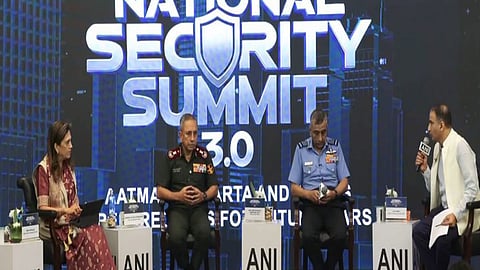
New Delhi: Chief of Defence Staff (CDS) General NS Raja Subramani has described the creation of Integrated Theatre Commands (ITCs) as an operational imperative rather than an administrative requirement, expressing confidence that India will make substantial progress towards their implementation before the next edition of the ANI National Security Summit. Speaking at the ANI National Security Summit 3.0 in New Delhi on November 16, he stressed that modern warfare demands integrated operations across all military services and domains.
Follow Defence Watch on LinkedIN
Highlighting lessons from Operation Sindoor, General Subramani said that future conflicts would extend beyond conventional land, air and maritime operations to include sub-sea warfare, cyber operations, electronic warfare, the electromagnetic spectrum, space and the cognitive domain. He emphasised that these operational environments are interconnected and cannot be managed effectively through isolated service structures.
Chief of the Air Staff Air Chief Marshal Ashutosh Dixit also expressed support for the theatreisation process, dismissing perceptions of institutional resistance within the Indian Air Force. Describing air power as the 'glue' connecting jointness and integration, he explained that air capabilities would remain relevant across all three services and operational domains.
Dixit confirmed that broad consensus had been achieved among the three services, with the remaining details being worked out. He described theatreisation as a transformational change involving a single commander exercising multiple domains together to achieve coordinated operational effects. He also stressed that the restructuring must be implemented carefully because of its long-term implications for the armed forces.
Integrated Theatre Commands are intended to bring Army, Navy and Air Force assets under unified operational commanders based on geographical and functional responsibilities. The proposed restructuring is expected to improve joint planning, coordination, resource utilisation and multi-domain combat effectiveness, while enabling the services to focus on their respective training and capability-development responsibilities.
The latest remarks indicate renewed momentum behind one of India's most significant military reforms. However, the final organisational structure, approval process and implementation timeline remain to be formally established. General Subramani expressed hope that by the next ANI National Security Summit, discussions would have shifted from the need for theatre commands to their progress and operational impact.
(Defence Watch– India’s Defence News centre that places the spotlight on Defence Manufacturing, Defence Technology, Strategy and Military affairs is on Twitter. Follow us here and stay updated.)
