
- Home
- Defence News
- Defence Appointments
- Defence Manufacturing
- Ministry of Defence
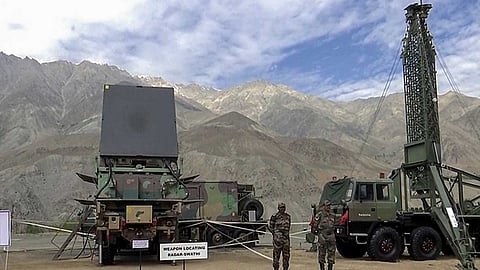
New Delhi: The latest Defence Ministry report has highlighted DRDO’s implementation of indigenous advanced technologies for next-generation radars and electronic warfare (EW) systems, as India accelerates efforts to build self-reliant capabilities in critical battlefield electronics and electromagnetic warfare.
The development covers technologies intended to improve the armed forces’ ability to detect, track, identify and counter sophisticated threats, while reducing dependence on foreign-origin systems for critical sensors and electronic warfare equipment.
Follow Defence Watch on LinkedIN
India has been steadily expanding its indigenous radar portfolio through DRDO’s Electronics and Radar Development Establishment (LRDE). Recent programmes include advanced surveillance and tracking radars designed for demanding operational environments. The Ministry of Defence has also placed orders with Indian industry for DRDO-developed radar systems, strengthening the link between indigenous research and large-scale production.
The EW ecosystem is developing along similar lines, with DRDO working on technologies covering electronic support measures, radar warning receivers, electronic countermeasures and airborne self-protection systems. These capabilities allow military platforms to detect hostile electromagnetic emissions and respond to threats operating within the electromagnetic spectrum.
The push is particularly significant as modern warfare increasingly depends on control of the electromagnetic spectrum. Radar and EW systems now operate alongside communications, airborne surveillance, unmanned systems and precision weapons, making electronic superiority an increasingly important component of battlefield effectiveness.
DRDO is also integrating these technologies with India's wider move towards network-centric and AI-enabled warfare. Sensor fusion, automated threat recognition and real-time sharing of battlefield information can allow multiple systems to operate as a coordinated surveillance and response network rather than as isolated platforms.
The indigenous approach is also creating opportunities for Indian defence companies to participate in the development and production of sophisticated electronic systems. DRDO's technology-transfer and industry-partnership programmes are intended to move laboratory-developed technologies towards operational deployment and domestic manufacturing.
For India, the objective extends beyond simply replacing imported equipment. Indigenous control over radars, electronic intelligence and countermeasure technologies gives the armed forces greater flexibility to customise systems for specific threats and reduces potential vulnerabilities associated with foreign supply chains.
The Defence Ministry's latest assessment therefore underlines an important element of India's Aatmanirbhar defence strategy: technological self-reliance is increasingly being pursued not only in visible platforms such as aircraft, missiles and ships, but also in the sensors and electronic warfare systems that determine how effectively those platforms operate on a modern battlefield.
(Defence Watch– India’s Defence News centre that places the spotlight on Defence Manufacturing, Defence Technology, Strategy and Military affairs is on Twitter. Follow us here and stay updated.)

